
An AI chatbot with memory is not a long transcript. Memory means last Tuesday still exists on Thursday: facts you can inspect and correct, plus rewind and branch so a bad turn does not poison the night. If the product only shows you the archive, you bought a log, not a ledger.
If you searched for AI chatbot with memory, editable memory, or whether Onscene is a companion app in disguise, start with the free AI chatbot memory scorecard. Five needs. An honest pattern table. No fake scrape of Kindroid, Nomi, or Character.AI “win rates.”
This article is the companion longread. It sells Onscene with feature proof — ~13 interactive anime stories on /stories, characters with memory, realtime chat, try-before-account, five free successful AI replies, then pay-as-you-go credits (Standard 5 / Uncensored 10; pack 150 credits = $5) — and it says when a catalog or a companion OS is still the right job. Pair it with the 2026 memory shortlist, the editable memory how-to, and Kindroid vs Nomi vs interactive stories. If the night is already looping, run the story-drift diagnostic first.
Disclosure: Onscene publishes this page. We are biased toward story worlds plus inspectable memory. Competitor columns below are typical patterns (pins, monthly plans, one-person OS), not a lab benchmark and not a live scrape.
Onscene is 18+ and fictional. Soft-censor framing: romance, mystery, long-running companionship, and scene craft — not explicit-first marketing.
Direct answer: which “AI chatbot with memory” should you use?
| You actually need… | Product class | Why |
|---|---|---|
| Infinite browse, short sessions, a new face tonight | Catalog chat (Character.AI-shaped) | Discovery is the product. Pins exist; long arcs still drift. |
| One person who “just remembers,” a monthly plan | Companion apps (Kindroid- / Nomi-shaped) | Memory-as-relationship. Story worlds are not the pitch. Verify on their sites. |
| A ledger you can edit, rewind, a parallel night, a premise | Story + continuity (Onscene) | Story memory, Rewind to here, Keep a separate version, ~13 stories, credits |
| Every dial and your own model | Power-user stack (SillyTavern + API) | Control, not convenience |
| Try tonight without a subscription | Metered credits | Onscene: try-before-account, 5 free replies, then 150 credits = $5 |
If you only remember one sentence: buy the memory job, not the word “memory.” Score it in five minutes on the memory scorecard.
What “AI chatbot with memory” must mean in 2026
Most disappointment is buying one layer and expecting another.
- Live context — recent bubbles the model can still see verbatim.
- Compressed history — summaries of older turns. Confident mush. Dropped negations.
- Durable editable memory — facts you can inspect, correct, pin, or delete.
- Repair tools — edit, rewind, branch so one bad sample does not become canon.
- Timeline hygiene — parallel nights that do not bleed.
- World / premise — a situation that can refuse to change for the wrong reasons, not only a person who chats.
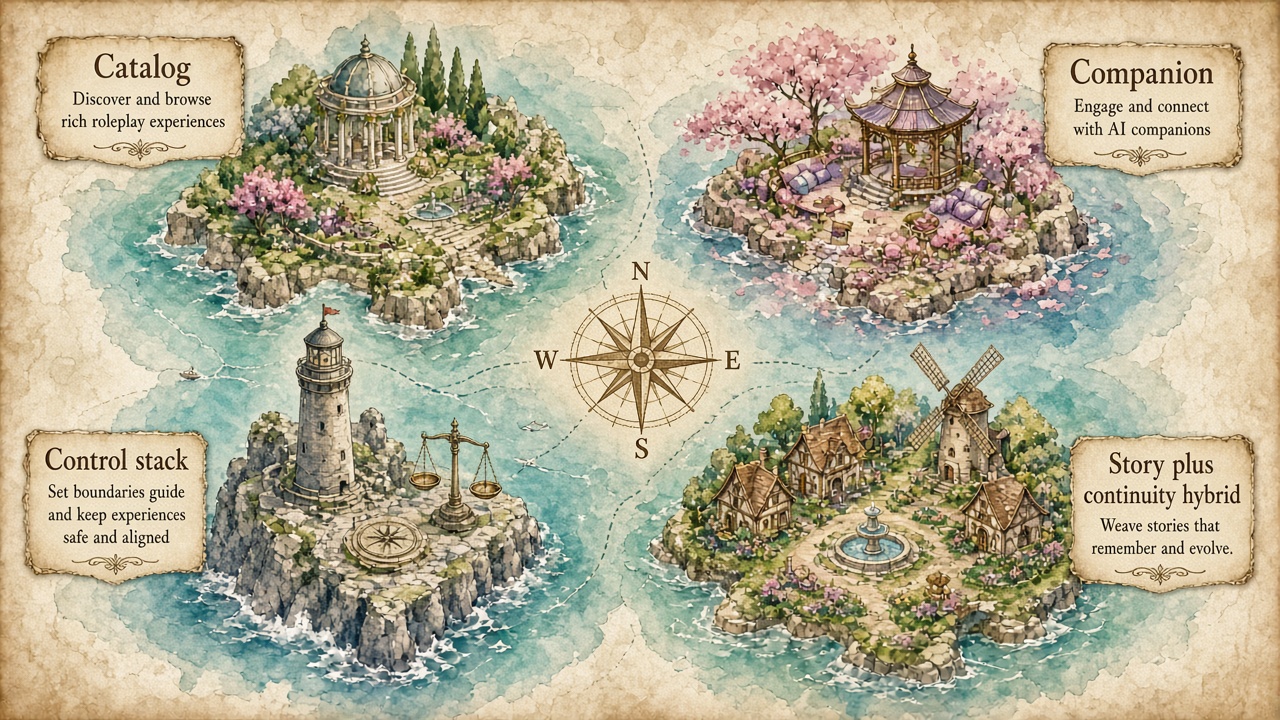
A catalog app can be excellent at (1) and still fail you at chapter length without (3)–(6). Companion apps often sell (3) as “they just remember,” which is the right product if you do not want to manage notes — and the wrong product if you need to correct a mushy summary before the next reply. Story platforms should show you the ledger.
Onscene’s claim is narrow and checkable. Open Story memory on a character. The panel says they only see these notes on the next reply. Edit the editable recap. Pin a fact. That pinned text is sent. That is not a hidden Character.AI-style summary you cannot see.
The five scorecard needs (and how Onscene proves each one)
The scorecard asks five questions. Here is the feature proof behind the Onscene column — and the honest miss.
1. When they forget a name, what do you actually need?
Ledger you can inspect and correct. Onscene: Story memory with sections labeled Facts that must stay true, What happened, Relationships, Current scene & recap. Pin, unpin, edit, remove. Add a correction. Save the recap. Corrections replace the recap for future replies; they do not rewrite the transcript. If your pinned notes exceed the reply budget, generation stops rather than silently omitting them — no credits used for that failure.
They should just remember me. That is the companion-OS job. Kindroid- and Nomi-shaped products pitch layered learned context or long-term recall as the whole product. Onscene will not pretend to be that. If you hate managing notes, the scorecard should send you to a companion — then verify on their site.
The transcript is enough. Catalog chat still fits. Short sessions. The archive exists; the active window still drops facts. That is a typical pattern, not a smear.
2. When a turn goes wrong, what should happen?
Rewind to that turn. Onscene character chat: Rewind to here. Restores the scene before the bad reply. Not an argument-prompt. Not “please forget that.”
Regenerate the last bubble. Fine for short nights. Split job. Most messengers stop here.
Start over or ignore it. Catalog default. Repair tools optional.
Companion apps vary. They usually pitch daily presence more than surgical rewind. We will not invent a rewind screenshot we did not take. Pattern label: typical companion, not a scrape.
3. Do you need a parallel version of tonight?
Keep this timeline and try the other door. Onscene: Keep a separate version from a turn in character chat. Stories can start a new timeline. The original night stays put.
One thread is the relationship. Companion-shaped. Forking the person is not the job. Honest miss if that is what you wanted.
Open a new chat. Catalog default. The old thread stays messy.
4. How do you want to pay for memory-heavy nights?
Pay as you go. Onscene: no subscription required. Five free successful AI replies, then credits. Standard 5 / Uncensored 10 to start a reply. Pack 150 credits = $5. Reading saved chats is free. Pinning, rewind, and a separate version do not spend extra credits by themselves.
A monthly plan is fine. Typical Character.AI-style and companion apps. Public marketing ranges change. Verify at checkout. We will not paste a fake “we tested 40 turns” number.
Try before an account. Onscene is try-before-account: realtime chat, then the free five after you join. Companion apps usually want a plan for serious daily use.
5. Story worlds, or one companion?
Playable story worlds with a cast. Onscene: about 13 interactive anime stories on /stories — Crown of Ashes, Last Train at Meridian, The Unchosen House, Room for Two, The House That Remembers, A Room Above the Clouds, and the rest of the live library. Plus characters with memory. Not a roommate OS.
One companion I live with. Honest miss. Pick a companion app. Dual-wield if you still want a plotted night on Onscene.
A bit of both this month. Split. Keep a companion where that is the job. Use Onscene when last Tuesday has to exist inside a story.
Honest comparison table (patterns, not fake scores)
Copied in spirit from the live scorecard. Marks mean Shipped / Typical pattern / Not the job / Honest miss.
| Need | Typical catalog chat | Typical companion app | Onscene |
|---|---|---|---|
| Editable memory | Typical pattern — pins and summaries; archive exists, active window drops facts | Typical pattern — layered learned context or “they just remember”; verify on their site | Shipped — inspectable notes you pin and correct; next reply sees the ledger |
| Rewind a bad turn | Typical pattern — edit or regenerate last bubble; poisoned night often means a new chat | Typical pattern — daily presence more than surgical rewind | Shipped — Rewind to here in character chat |
| Branch / keep a version | Not the job — open another chat | Not the job — one relationship thread is the product | Shipped — Keep a separate version; stories start another timeline |
| Pay as you go vs subscription | Not the job — monthly catalog or companion passes are the usual shape | Not the job — typically a monthly plan | Shipped — 5 free replies, then credits; 150 = $5 |
| Story worlds vs one companion | Not the job — a directory of chats | Shipped for their job — one person you live with | Shipped — ~13 interactive anime stories + characters with memory |
No row is a scientific benchmark. It is a map of what kind of memory product you are buying. For named competitors and their own marketing language, read the 2026 shortlist. For companion-OS vs story-hub, read Kindroid vs Nomi vs interactive stories.
Catalog vs companion vs story platform (without the listicle)
Catalog chat — discovery wins, continuity complains
Character.AI remains the default AI chatbot with memory search result because the catalogue is unmatched. People still leave long threads about forgotten names, collapsed arcs, and pins that are not enough. That is not a niche gripe. It is the category’s loudest frustration.
Choose catalog when: you want endless character browsing and short-to-medium sessions.
Look elsewhere when: you need a ledger you can edit, a clean fork of a timeline, or a story world with a premise instead of prompt begging.
Onscene is not pretending to out-catalogue anyone. We compete on continuity craft and playable scenes.
Companion apps — memory as the relationship
Kindroid and Nomi show up in 2026 roundups as persistent companion products: layered / editable learned context (Kindroid’s docs/marketing) and short/medium/long-term memory plus mind-map style UX (Nomi’s positioning). They are the honest answer if your pain was “they do not know me,” and you want one relationship to deepen — not a story hub.
They are usually subscription-shaped. Prices move. Verify on their sites. The scorecard will tell you when that class still wins. Onscene will not invent a retention percentage to “beat” them.
Choose companion when: one person is the product.
Look elsewhere when: you wanted a train that resets, a house that remembers, a court with a clock.
Story + continuity — Onscene’s lane
Onscene is a smaller story platform with characters who remember. The live kit:
- Interactive anime stories on /stories — on the order of ~13 playable worlds.
- Characters with memory on /characters: Story memory, pin/correct notes, editable recap.
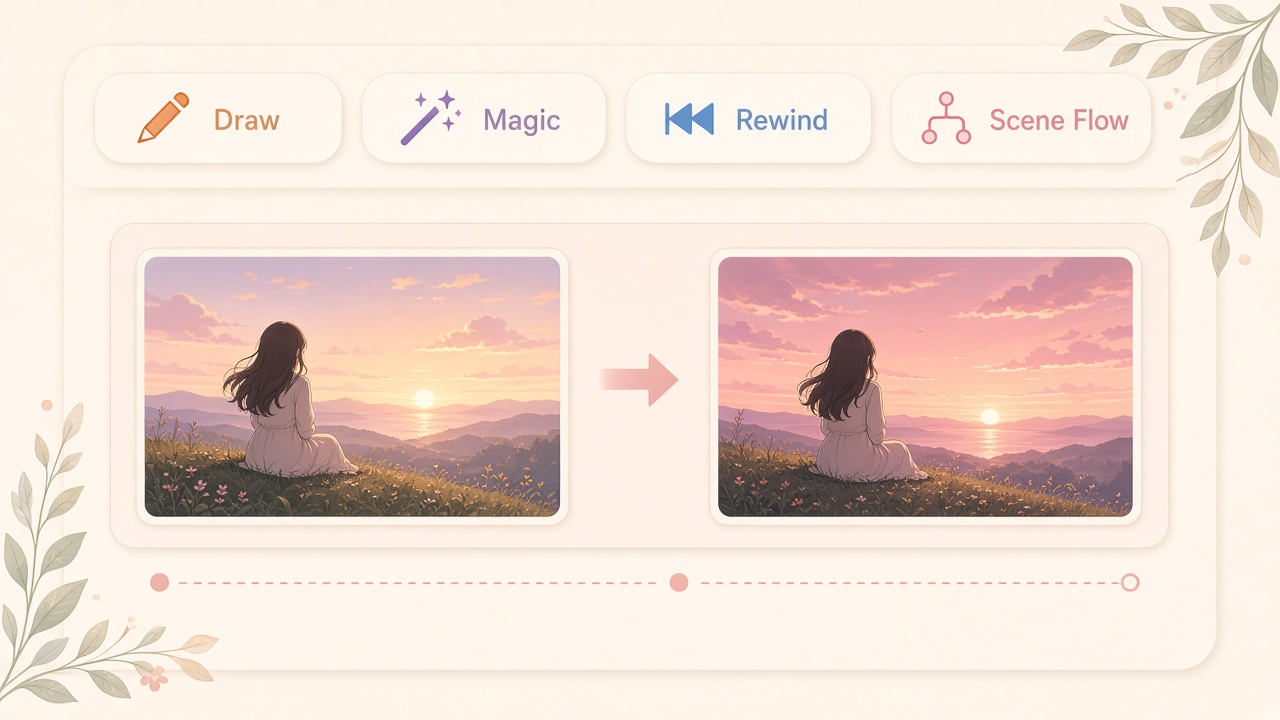
- Character chat timeline menu: Edit message, Keep a separate version, Rewind to here.
- Story timelines: start another timeline without deleting the first night.
- Realtime chat, try-before-account, then five free successful AI replies.
- Credits: Standard 5 / Uncensored 10 to start a reply; starter pack 150 credits = $5. No subscription required. Details: /credits and how credits work.
Play from the live directory and story worlds. Do not invent extra product surfaces that are not on those pages.
Choose Onscene when: you want a face and a premise, a ledger you can fix, rewind/branch, and metered nights.
Choose someone else when: you need library scale, or one companion as the main loop.
A fair test (same scene, three product classes)
Stop trusting landing pages.
- Establish three facts: a place name, a promise, a boundary.
- Play twenty to forty ordinary turns — not a memory quiz every message.
- Ask naturally about the three facts.
- Corrupt one fact on purpose. See whether you can edit memory or only scold in chat.
- Rewind or branch if the product offers it. Check whether the original timeline stays clean.
- Note wait/streaming feel and whether you would return tomorrow.
- Write down what you paid, or would pay, for that night.
Onscene-specific version: pick a constrained premise on /stories or a portrait on /characters. Pin the three facts in Story memory before they have a chance to mush. Spend the free replies on the scene. If a turn goes wrong, Rewind to here once instead of regenerating five times. If you want the other door, Keep a separate version.
Run the same ritual on a catalog bot and on a companion app. Whichever survives your writing style is your real AI chatbot with memory. The scorecard is the map you fill in before you spend a month.
Credits vs a memory subscription
Memory-heavy nights are where monthly plans feel either cheap (you chat every day) or insulting (you wanted two scenes and a pause).
Onscene’s opposite bet:
- Try-before-account.
- Sign in: five free successful AI replies, including regenerations.
- Then one-time packs. Planning example: 150 credits = $5.
- Idle weeks cost $0. Reading saved chats stays free.
- Continuity tools (pin, rewind, separate version) are not a second wallet.
Standard vs Uncensored is a content lane, not a memory upgrade. If the scene went generic mid-beat, switch lanes. If the name vanished, open Story memory. Mixing those failures is how people buy the wrong product. Sketch a month on the credits estimator. For the c.ai+ comparison, see Character.AI subscription vs Onscene credits.
Soft CTAs (score, then play)
- Score the job: AI chatbot memory scorecard — five needs, pattern table, live Onscene mapping.
- If the night is already looping or forgetting: story-drift diagnostic.
- Play a premise: /stories — ~13 interactive anime stories.
- Pin a fact on a person: /characters.
- Pay as you go: /credits. Sketch a habit with the estimator.
Still choosing an app family? Character.AI alternative quiz. Companion vs story hub? Kindroid vs Nomi vs story picker. Craft: memory how-to, story drift fix, story controls.
FAQ
What is an AI chatbot with memory?
Not a long transcript. Memory means last Tuesday still exists: facts you can inspect and correct, plus rewind and branch so a bad turn does not poison the night. Score which of those five needs you actually have on the memory scorecard.
Does Onscene have editable memory?
Yes. Characters with memory: Story memory — inspectable notes you can pin and correct, plus an editable recap. Rewind to here and Keep a separate version are live in character chat. Onscene is still a story platform — about 13 interactive anime stories on /stories — not a companion OS.
Is Onscene better than Kindroid or Nomi for memory?
Different jobs. If you want one person on a subscription who “just remembers,” those apps still fit — verify on their sites. Onscene wins when you want stories, a ledger you can edit, rewind/branch, and pay-as-you-go credits. The scorecard treats them as typical companion patterns, not a live scrape.
Do memory tools cost extra credits?
No. Five free successful AI replies per account, then credits: Standard 5 / Uncensored 10; pack 150 credits = $5. Pinning, rewind, and a separate version do not spend extra credits by themselves. The next model reply after a rewind still spends a successful reply.
Can I try an AI chatbot with memory on Onscene without a subscription?
Yes. Try-before-account, then five free successful AI replies after you join. No monthly plan. Packs are one-time. Play from /stories and /characters.
Why isn’t a transcript enough?
The context window is a spotlight. Summaries invent confident mush. A name in the log can still be missing from the prompt the model actually sees. Editable memory exists so mush is not the final authority.
What if my scene is looping instead of forgetting?
That is story drift, which often stacks with memory failure. Run the story-drift diagnostic and read how to fix story drift.
Is this an explicit-first memory app?
No. Onscene is 18+ and fictional. Public pages stay in a soft-censor lane: mature scene craft, not pornographic marketing. Content lanes exist in chat and cost different credit holds; they are not a substitute for Story memory or rewind.
Bottom line
AI chatbot with memory is a job, not a feature checkbox. Catalog apps sell discovery. Companion apps sell one relationship. Onscene sells playable scenes plus a ledger you can pin, a rewind you can press, and a separate version you can keep — then credits when the model actually replies.
Take the memory scorecard. If it points at Onscene, open a world on /stories, pin one fact, and spend the five free replies on a night that has to remember you. Stay in the scene. 18+ fictional adults only.