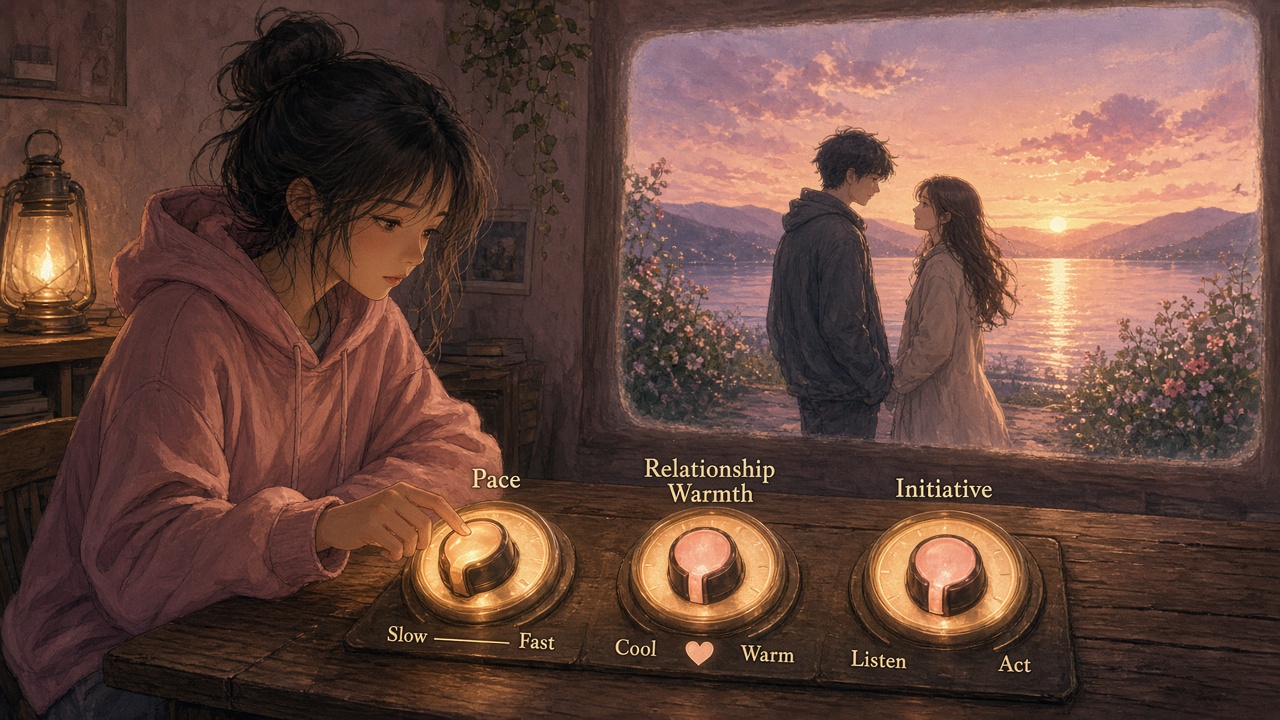
Story drift is when an AI roleplay stops being the same night. The apology loops. The name evaporates. Rivals become roommates with no beat in between. The model is still writing a plausible next bubble. It is no longer writing a coherent next beat.
If you searched for story drift, AI roleplay looping, keeps forgetting, or a way to rewind and branch instead of starting over, start with the free AI roleplay story-drift diagnostic. It is eight yes/no symptoms, a plain-language band, and a map to what Onscene ships today — not a roadmap, not a million-bot directory.
This article is the craft companion to that checklist. It stays feature-accurate: interactive anime stories on /stories (about 13 playable worlds), characters with memory, realtime chat, try-before-account, then five free successful AI replies and pay-as-you-go credits. For the deeper ledger walkthrough, see editable memory, rewind, and branch. For pace and initiative, see story controls that fight drift. After the free five, model turns spend credits — how Onscene credits work.
Onscene is 18+ and fictional. Soft-censor framing throughout: romance, mystery, tension, and scene craft — not explicit-first marketing.
Direct answer: how do you fix story drift?
- Name the failure. Looping scene, forgotten fact, personality jump, no rewind, no parallel version, mid-story generic rewrite, two plots in one thread, or no ledger to correct. Guessing “the model is dumb” wastes a night.
- Run the diagnostic. Two minutes, eight checkboxes: story-drift diagnostic.
- Move the scene into a premise if the room has no spine. Play one of ~13 interactive anime stories on /stories — Last Train at Meridian, The House That Remembers, A Room Above the Clouds — not a blank messenger.
- Correct the ledger, do not scold the character. Open Story memory on a character. Pin the name, the promise, the room. What you pin is what the next reply sees.
- Rewind the infected turn. In character chat, Rewind to here. Do not argue in-character with a reply you already accepted.
- Keep a separate version when you want both doors. The original night stays put. Stories can start a new timeline.
- Pay for replies, not for the repair tools. Pinning, rewind, and a separate version are client timeline tools. Credits settle successful AI replies after the free five. Starter pack: 150 credits = $5.
If you only remember one sentence: transcript history is not memory, and a plausible next bubble is not a story.
What story drift actually is (four stacked problems)
People say “it drifted” when they mean four different failures stacked on the same thread.
- No durable constraint. Chat has a person. A story needs a situation that can change and refuse to change for the wrong reasons. “The train resets at 11:47” is a constraint. “Be interesting” is a vibe.
- No turn structure. In messenger-style chat, every bubble is equal. Some moves should advance plot, some should deepen character, and some should pause. Catalog apps optimize for another affectionate line.
- Memory treated as nostalgia. The archive exists. The active window does not prioritize last Tuesday. Summaries mush names, drop negations, and keep tone.
- No repair path. A bad turn poisons the rest of the night because you can only regenerate the last bubble, argue in parentheses, or open a new chat.
That stack is why AI roleplay looping and forgotten names show up in the same search session. They are cousins. The diagnostic treats them as separate checkboxes so you do not buy the wrong fix.
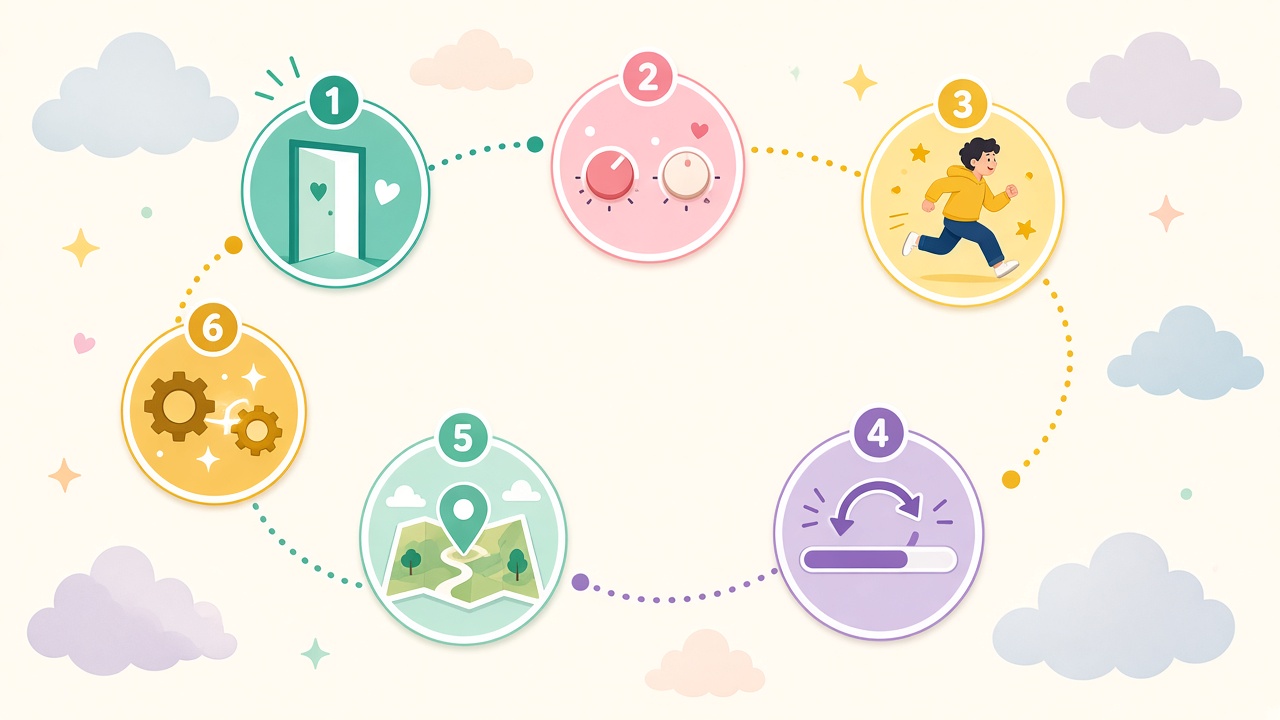
The eight symptoms (use the checklist, then come back here)
The story-drift diagnostic scores these eight. Mark what you actually hit. Do not mark the ones that sound dramatic.
1. The same scene keeps looping
They apologize, you accept, they apologize again. The confession repeats. The train “resets” as flavor, not as a rule you can test. Looping is the model sampling a high-probability beat because nothing in the prompt assembler is forcing a new beat.
Onscene help today: play a story with a premise that can refuse to change for the wrong reasons. Last Train at Meridian is literally a loop you can investigate. A blank “hey” chat will re-loop.
2. Forgotten names, promises, or rooms
Last Tuesday vanished. They ask who you are in a story that already named you. This is the spotlight problem: the context window is not a hard drive. Compressed history drops the page.
Onscene help today: open Story memory. The panel is explicit: they only see these notes on the next reply. Edit the editable recap. Add a correction under Facts that must stay true. Pin it. What you pin is sent. Scolding in chat is a weak correction.
3. Sudden personality or relationship jump
Rivals become roommates overnight. Slow-burn skips ahead with no beat in between. Tone is cheaper for a model to improvise than logistics.
Onscene help today: pin the relationship fact (“We are rivals who share a kitchen; we have not admitted why”). If the jump already landed, Rewind to here before the leap, then keep playing. Do not accept the cute wrong turn “because the next line was good.” That teaches the recap the wrong past.
4. No rewind when a turn goes wrong
A bad reply poisons the rest of the night. You can only argue in chat or start over. Regenerating the last bubble is not rewind. A new chat is not rewind.
Onscene help today: character chat message menu — Rewind to here. That control is live. It restores the scene before the infected turn instead of writing an apology into canon.
5. No parallel version of tonight
You cannot keep this timeline and try the other door. One thread, all-or-nothing. Catalog default: open another chat and lose the fork.
Onscene help today: Keep a separate version from a turn in character chat. On /stories, start a new timeline. The original night stays put. That is the difference between a story platform and a messenger.
6. The scene goes generic mid-story
A public-safe rewrite wakes up. The beat turns polite, empty, or suddenly “appropriate” for no in-fiction reason. Players call this amnesia. Often it is a content lane, not a forgotten plot.
Onscene help today: Standard vs Uncensored is a content lane, not a memory upgrade. Standard holds 5 available credits to start a reply; Uncensored holds 10. Soft-censor adult fiction either way — 18+, not an explicit-first library. If the scene went generic, switch lanes in chat. If names vanished, that is still a ledger problem.
7. Two plots contaminate one thread
College rivals and end-of-world survivors share one tangled chat. No premise holding the room. The model averages them into mush.
Onscene help today: separate timelines. Play the court in Crown of Ashes. Keep the loft in Room for Two. Do not ask one thread to be two campaigns.
8. You cannot correct what they remember
The only fix is another message. There is no ledger to pin a name or delete a mushy summary. Pins on a giant catalog help until the active window stops caring.
Onscene help today: inspectable memory notes you can pin, edit, and remove. Sections in the live panel: Facts that must stay true, What happened, Relationships, Current scene & recap. Corrections replace the recap for future replies. They do not rewrite the chat transcript — which is the point. You want the next reply to see the truth, not a cosmetic edit in the log.
Why catalog chat invites drift (even when you “did nothing wrong”)
Catalog messengers are good at discovery. They are built to hand you another face. Long arcs are a side effect, not the product.
- The next bubble is the objective. A story’s objective is the next valid beat.
- Library scale fights continuity. A million bots cannot each carry an inspectable ledger you actually maintain.
- Filters and summaries collide. A mid-scene generic rewrite feels like forgetting. A dropped name is forgetting. Mixing them makes you buy the wrong app.
- Repair is social, not surgical. “Please remember” is not a control. It is dialogue.
Onscene will not pretend to out-catalogue Character.AI. The bet is smaller and meaner: ~13 illustrated story worlds, characters with memory, realtime chat you can try before an account, and buttons that change the timeline.
If you are still choosing an app family (catalog vs companion vs story), take the Character.AI alternative quiz or score the memory job on the AI chatbot memory scorecard. This page is the drift repair manual.
What Onscene ships for drift (live only)
Ground the workflow in chrome you can press tonight.
Playable stories. About 13 interactive anime stories on /stories. Premises with constraints: a train that resets, a house that rearranges a room at midnight, an inn that unties itself from the mountain, a court with a forged seal. Story-led play is the /play/[id] path — a shared opening, a cast tied to the premise, room for the scene to mean something.
Characters with memory. Portrait-led chat on /characters. Story memory is the inspectable ledger: editable recap, pin/unpin notes, add a correction. The copy in the panel is the claim: this is not a hidden summary — what you pin is what we send.
Realtime chat. Responsive text and portrait presence. Try-before-account: you can talk before you join. After you sign in, five free successful AI replies (account-wide, including regenerations). Then credits.
Timeline controls in character chat. On a message: Edit message, Keep a separate version, Rewind to here. Independent timelines so parallel nights do not bleed.
Story timelines. On a world, you can start another timeline instead of overwriting the first night.
Credits, not a subscription. After the free five: Standard needs 5 available credits to start a reply; Uncensored needs 10. Unused hold returns. Length and context change settlement. Starter pack 150 credits = $5. Reading saved chats is free. Pinning and rewind do not spend extra credits by themselves. Details: /credits.
Play from the live directory and story worlds. Do not invent product names that are not on those pages.
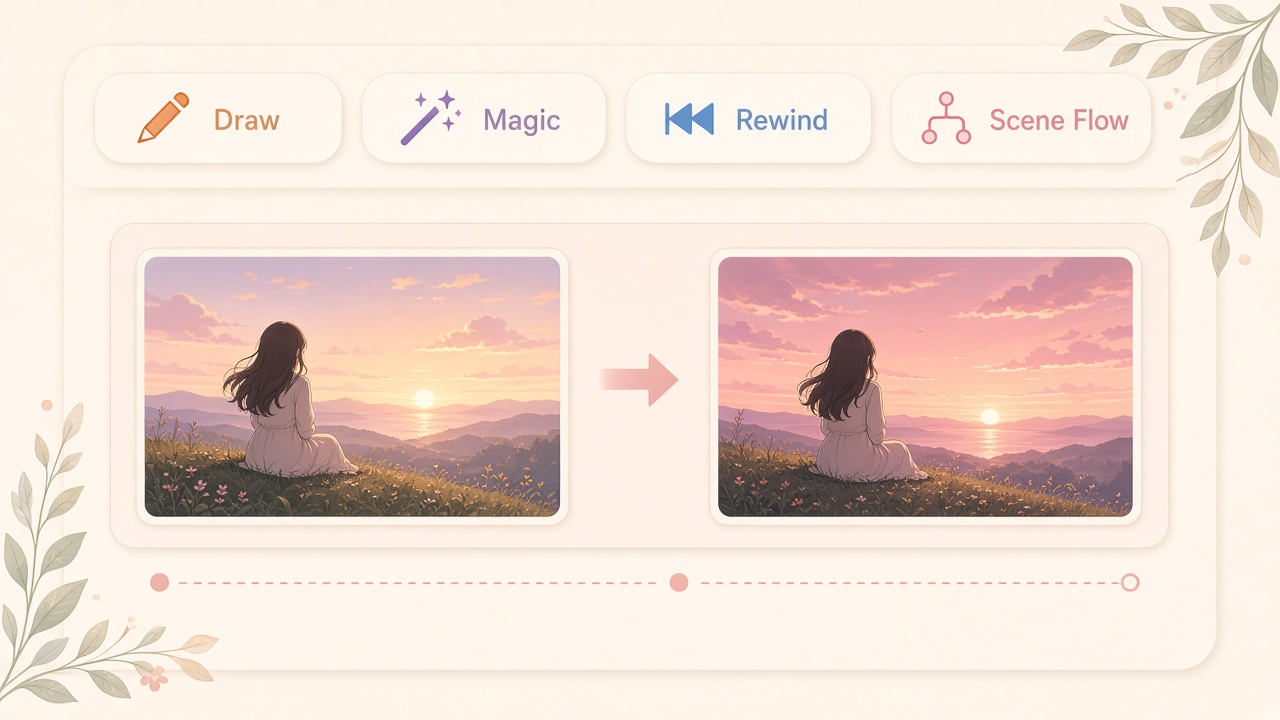
A repair ritual you can run in one sitting
Stop trusting landing pages — including this one — until you press the buttons.
- Open the story-drift diagnostic and mark the eight symptoms against last night’s thread, not a hypothetical.
- Pick a constrained premise on /stories or a portrait on /characters. Spend the free replies on the scene, not on shopping the library.
- Establish three facts out loud: a place name, a promise, a boundary. Then immediately pin them in Story memory.
- Play twenty ordinary turns. Do not quiz the character every message.
- Ask naturally about the three facts.
- If one is wrong, edit the recap or pin a correction. Send one more turn. If the error persists, you have a ledger problem, not a “vibes” problem.
- Corrupt a beat on purpose — pick the worse door. Rewind to here. Confirm the original line is gone from the active night.
- From the same fork, Keep a separate version. Confirm the first timeline still exists.
- Note what you paid, or would pay. Sketch a longer week on the credits estimator if money is the real objection.
Whichever product survives that ritual on your writing style is your real drift fix. Rankings are maps, not destiny.
When a story world beats open chat (and when it does not)
Enter a story when the fifth message could not happen in any room. You need a clock, a house, a crew, a lease, a garden with rules. Drift loves empty chat because empty chat has nothing to contradict.
Open a character when the plot is mostly chemistry and conversation, and you already know the relationship tone. Memory, rewind, and a separate version still apply. You are directing a person, not a campaign.
You do not have to choose forever. Many players start in a story world for structure, then keep a parallel character chat for intimacy. Others do the reverse. Dual-wielding a catalog app for discovery and Onscene for the night that has to remember you is normal. See the 2026 roleplay-with-memory shortlist if you want the wider field, and Chai alternatives for story continuity if you left a shallow feed.
Credits, without a fake “messages per $5”
Repair tools are free in the sense that they do not meter like replies. The model still costs when it answers.
- Five free successful AI replies after you join. Account-wide. Regenerations count.
- Then Standard 5 / Uncensored 10 as the hold to start a reply. Settlement is typically inside that range depending on length and context. Unused hold returns.
- Packs are one-time. The planning example we repeat everywhere: 150 credits = $5. Larger packs exist on /credits. There is no weekly Pro on this page.
- Idle weeks cost $0. Rereading saved chats stays free.
Do not advertise a slogan message count. Use the estimator for your habit. For the subscription-vs-credits decision, see Character.AI subscription vs Onscene credits.
Soft CTAs (diagnose, then play)
- Diagnose the leak: AI roleplay story-drift diagnostic — eight symptoms, live Onscene mapping.
- If the job is “AI chatbot with memory” more than looping: memory scorecard and the scorecard companion longread.
- Play a premise: /stories — ~13 interactive anime stories, try-before-account, then five free replies.
- Pin a fact on a person: /characters.
- Pay as you go when the free five are done: /credits.
Craft if you want the longer how-tos: memory, story controls, realtime presence, credits explained.
FAQ
What is story drift in AI roleplay?
Story drift is when the scene loops, forgets names, or jumps personality because the model is writing a plausible next bubble instead of a coherent next beat. Transcript history is not memory. The diagnostic splits the failure into eight symptoms so you can tell a content-lane rewrite from a missing ledger.
How do I stop AI roleplay from looping the same scene?
Give the night a constraint the model has to honor, then rewind when it cheats. Play a story world with a premise (Last Train at Meridian, The House That Remembers) instead of a blank chat. If the loop already landed, Rewind to here rather than accepting another apology into canon.
Can Onscene rewind a scene that went wrong?
Yes. In character chat: Rewind to here, or Keep a separate version. Stories can start another timeline. That is live today. Play from /characters and /stories.
Why do AI characters keep forgetting names?
The context window is a spotlight, not a hard drive. Summaries drop facts. Onscene ships Story memory: inspectable notes you can pin and correct so the next reply sees the ledger, not only the latest vibe.
Is story drift the same as a filter break?
No. A mid-scene generic rewrite is often the Standard content lane, not amnesia. Onscene’s Uncensored hold is 10 credits vs Standard 5 — a content lane, not a memory product. Soft-censor adult fiction either way. Forgotten names still belong in the ledger.
Do rewind and memory notes cost extra credits?
No. Five free successful AI replies per account, then credits: Standard 5 / Uncensored 10; pack 150 credits = $5. Pinning, rewind, and a separate version do not spend extra credits by themselves. Generating the next model reply after you rewind still spends a successful reply.
Should I use a companion app instead?
If the job is one person who “just remembers” on a monthly plan, companion apps still fit — verify them on their sites. Onscene is a story platform with characters with memory, not a roommate OS. Score that fork on the memory scorecard.
Can I try Onscene before making an account?
Yes. Onscene is try-before-account: realtime chat, then five free successful AI replies after you join. Playable stories on /stories are the signed-in path for saved continuity. Credits start only after the free replies.
Bottom line
Story drift is not a prompt you failed to write. It is a missing spine, a missing ledger, and a missing rewind. Catalog chat will keep improvising a new night because that is what messengers do.
Run the story-drift diagnostic. Open a world on /stories or a character on /characters. Pin the fact. Rewind to here when a turn goes wrong. Keep a separate version when you want both doors. Stay in the scene. 18+ fictional adults only.