A multi-character cast interactive anime story is a playable illustrated world where two or three named characters share one throughline — locations, promises, and rivalries persist across speakers. Onscene ships that product on : about 13 live worlds (the hub copy reads “13 stories · adult cast”), many with 2–3 character casts, plus editable memory, rewind, and branch so ensemble continuity does not reset when the model samples a convenient next line.
If you searched multi character AI story, AI story with cast, or interactive anime story multiple characters, you are not asking for a bigger 1:1 chatbot inbox. You already have Character.AI, Talkie, PolyBuzz, Chai, and companion apps like Kindroid or Nomi for that job. You want a cast that shares one plot — and tools that keep the auditor from forgetting the prince’s ledger, or the conductor from losing the passenger he hid from the loop. This page is the comparison-plus-how-to for that job. Soft-censor throughout: stories, anime, realtime text, continuity craft — not companion-primary or explicit-first marketing.
Disclosure: Onscene publishes this page. We sell interactive anime stories and pay-as-you-go credits. Competitor “group chat” marketing (Reverie and cousins) is described from public positioning, not as a lab score. Onscene does not ship a separate group-chat product.
Onscene is 18+ fictional adults only.
Direct answer: 1:1 chatbot thread vs cast story world
A 1:1 chatbot thread is one speaker window. A multi-character cast interactive anime story is one world with several speakers who do not share a hive mind.
| You actually want… | Product class | Why |
|---|---|---|
| One face, one inbox, short chemistry | Catalogue chat (Character.AI, Talkie, PolyBuzz, Chai) | Discovery is the product; ensemble plots are homework |
| One person who “just remembers you” | Companion OS (Kindroid, Nomi) | Relationship memory, not a playable cast |
| A room where several people talk at once | Group-chat story apps (Reverie-class marketing) | Confirm their live UI — Onscene is not this SKU |
| Illustrated worlds with a 2–3 character cast | Onscene | Live ~13 stories, adult casts, memory edit / rewind / branch, PAYG credits |
| 1:1 portrait chat plus a world you can enter | Onscene /characters + /stories | Two surfaces, one continuity toolkit |
Bottom line: if the plot needs a rival and an auditor and a regent who do not all know the same secrets, a messenger thread will collapse the cast into one mood. Change product class — then pick billing.
For the format fork (open chat vs playable world) see AI chatbot vs interactive story world. For steering pace and initiative inside a scene, see interactive AI storytelling without drift.
What a multi-character cast interactive anime story is
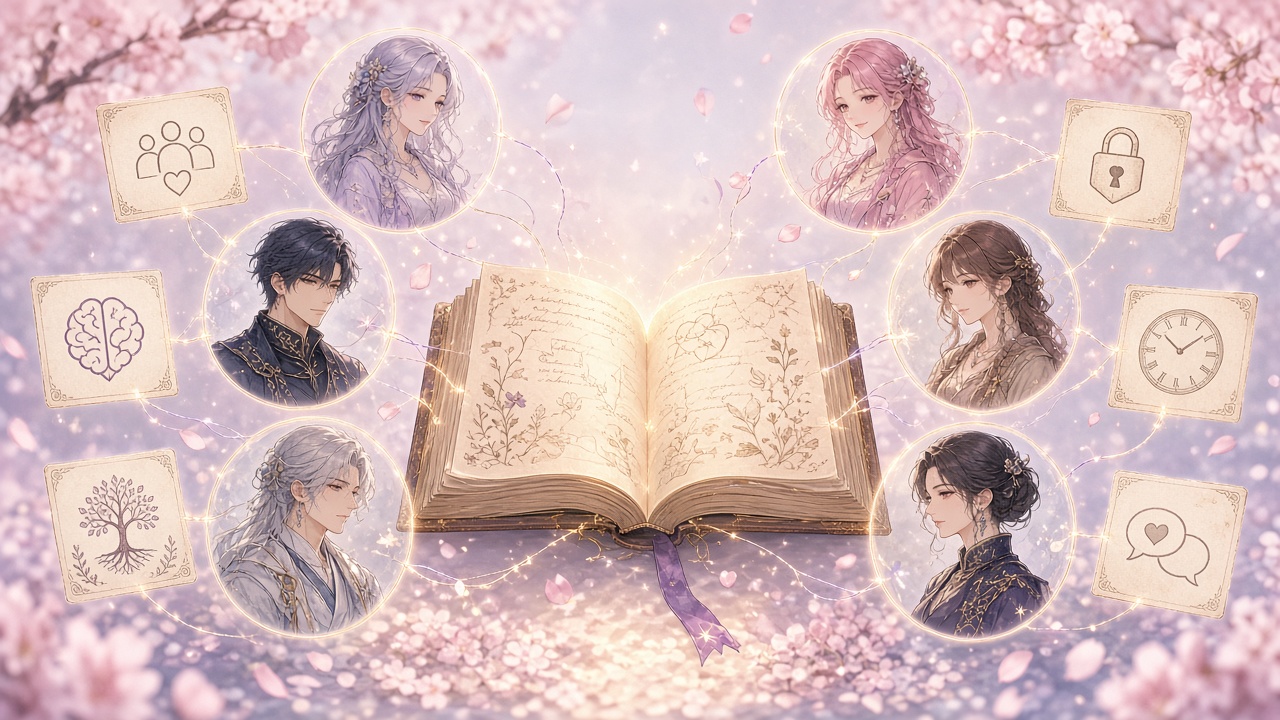
A multi-character cast interactive anime story is playable fiction with a premise, a small named ensemble, and consequences that stick when the speaker changes. It is not a group DM with avatars glued on.
Four properties have to be true at once:
- A situation, not only a person. The train resets at 11:47. The inn unties from the mountain. The court profits from a forged seal. The world can refuse a vibe.
- Two or three distinct speakers. Each has a job, a public goal, and a relationship to the others. Onscene story pages list those names; the hub labels the catalogue “13 stories · adult cast.”
- Knowledge boundaries. A cast is not a shared group mind. Onscene’s player-facing rule is explicit: each named speaker only knows what they have seen or been told in this timeline. Private notes stay with that person.
- Continuity you can repair. Editable memory, rewind, and branch are the difference between “the model forgot Sera’s audit” and “you put the audit back before the next reply.”
That is the AI story with cast job. Catalogue apps can simulate a party if you prompt hard enough. They still optimize for the next bubble from whoever is currently “on screen.” Ensemble AI roleplay that lasts past message forty needs a world that remembers the party, not a prompt that begs it to.
Why 1:1 chatbot threads break ensemble plots
A 1:1 chatbot thread breaks a cast because the product only has one spotlight. Recent tone from the last speaker beats last night’s facts about everyone else.
Character.AI is excellent at one bot, one box. You can write a scenario that mentions three people. The model will still flatten them: the rival starts sounding like the mentor; the missing passenger becomes a joke the conductor never made; the housekeeper and the solicitor share one personality because the context window ran out of room for two. Pins help. They do not turn a messenger into a stage.
Talkie-class apps add collectible energy. A new card looks like a new cast member. Twenty messages later you still have light chat, not story continuity across characters. That is the Talkie-exit wound mapped in Talkie alternatives for anime story continuity: the grid refreshes; the plot does not.
PolyBuzz-class feeds and Chai-class catalogues repeat the same class miss with different art. Infinite browse is the product. An ensemble AI roleplay story is not. If ads, energy, or shallow scenarios were the week you had, PolyBuzz alternatives is the sibling map — still not a cast engine.
Kindroid and Nomi are honest about a different center of gravity: one companion. Their memory marketing is relationship-shaped. They are the wrong shortlist when you wanted Vael and Sera and Oren in the same coronation night.
The failure is structural:
- One inbox = one recency bias. The last speaker eats the others.
- Transcript ≠ ledger. History exists; the active window does not prioritize the auditor’s evidence or the medic’s supply count.
- Corrections in dialogue are weak. Telling the prince “Sera already has the ledger” does not update durable memory. The next scene samples the old world.
- No knowledge walls. Group-flavored chat often leaks secrets. A real cast needs not knowing.
If your multi character AI story keeps collapsing into a duet, you do not need a better prompt. You need a world with a cast list and a continuity toolkit.
How Onscene /stories actually ship casts (live facts only)
Onscene’s live truth is illustrated interactive stories with multi-character casts, plus 1:1 character chat with memory. That is two doors, not a hidden group-chat SKU.
What is live (confirm on site):
What this page will not sell: a separate Onscene group-chat product. If you need a many-to-many chat room as the interface, look at Reverie-class apps and verify their live UI. If you need a playable anime story where a small cast shares one illustrated premise, stay here.
Named examples (no spoilers): Crown of Ashes lists Vael, Sera, and Oren — exile, auditor, regent. Last Train at Meridian lists Ivo, Ada, and Basil — conductor, technician, impossible passenger. The Ninth Expedition lists Kael, Tamsin, and Ves — scout, medic, local caretaker. A Room Above the Clouds is a tighter pair (Rafi and Vera) still sharing one floating inn. The pattern is consistent: adult cast, small, job-bearing, connected to each other.
You can also ignore Create and play the roster as written. Create Character is for when the live cast is missing your extra person — then you chat 1:1. It does not turn Onscene into a user-generated group-chat network.
Why cast dynamics collapse when memory resets
Cast dynamics collapse when memory resets because relationships are asymmetric. If the model forgets one fact, two other people start acting like it never happened.
Work a concrete night. In Crown of Ashes, Sera’s public goal is an audit that survives scrutiny. Vael needs her evidence and knows she will audit him too. Oren controls the records. If memory drops “Sera already saw the forged seal,” three failures land at once:
- Tone reset. Vael returns to stranger-polite. The rivalry-to-alliance work evaporates.
- Knowledge leak or knowledge wipe. Either Oren suddenly “knows” a private finding, or nobody remembers the finding. Both break the court.
- Player labor. You re-explain the plot instead of playing the coronation.
The same wound appears on the train. Ivo hid a passenger from the loop. Ada wants every passenger accounted for. Basil does not want to be treated as the defect. If the loop “forgets” the hidden ticket, the ensemble is no longer solving one mystery. It is three chatbots improvising adjacent vibes.
Story continuity across characters is therefore stricter than 1:1 memory. You are not protecting one name. You are protecting:
- Who owes whom a fact.
- Who is allowed to overhear.
- Which promise was public vs private.
- Which relationship stance is current (rivals, coworkers, reluctant allies).
That is why “I pinned it in chat” is a weak fix. Pins sit in one thread. A cast lives in a world. Onscene’s inspectable ledger plus rewind/branch is built for the second shape. Craft how-to: AI character memory — edit, rewind, branch.
If the night is already looping, do not guess. Run the story-drift diagnostic and score the memory job on the AI chatbot memory scorecard before you pay anyone again.
Editable memory, rewind, and branch protect the ensemble
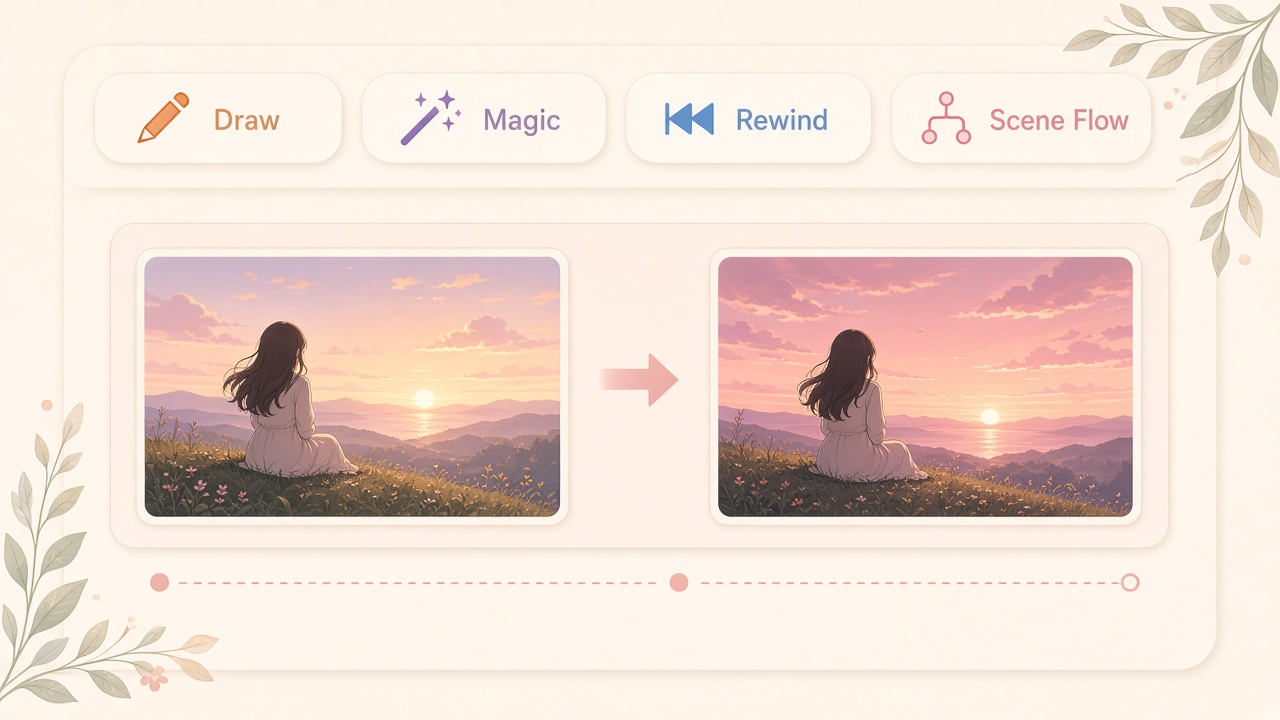
Editable memory is the inspectable ledger of facts a scene must keep. Rewind removes a bad beat. Branch keeps a parallel night. Together they protect a cast because you can correct state instead of arguing with three speakers in dialogue.
Use the toolkit as a director, not as a scold.
1. Pin ensemble facts, not vibes
Write facts a second speaker could contradict:
- “Sera has the original withdrawal record. Vael has not seen her private notes.”
- “Ivo concealed Basil from the 11:47 reset. Ada has not been told.”
- “The inn lifted before breakfast. Vera is checking the route; Rafi is serving tea.”
Do not pin “be dramatic.” Dramatic is a sample. The ledger is who holds which paper.
2. Correct the ledger, then continue
If the model merges two people or drops a negation, edit memory. Do not spend five regenerations hoping the auditor remembers she is an auditor. Regenerations still count as successful replies against the five free and later credits.
3. Rewind a single speaker’s wrong move
When one cast member breaks the knowledge wall — the solicitor recites a letter he never read — rewind that beat. Leaving it “because the next line was cute” teaches the summary the wrong past. Infection control for ensembles is stricter than for duets: one leak poisons three relationships.
4. Branch instead of overwriting the only night
Want the expedition to trust Ves and also see the night you refused the contract? Branch. Independent timelines keep parallel stories from bleeding. A cast that remembers two contradictory treaties is not mysterious. It is broken.
5. Pair memory with story controls
Pace, relationship, initiative, style, and length steer the scene so the medic does not suddenly become a roommate. Controls plus memory beat either alone. Full steering guide: story controls that keep interactive AI stories from drifting.
Onscene-specific ritual (use this on every candidate app too):
- Enter a live world on .
- Establish three facts that involve two different named characters (a place, a promise, a secret one of them does not know).
- Play twenty to forty ordinary turns — not a memory quiz every message.
- Ask naturally. See whether the other speaker still respects the wall.
- Corrupt one fact on purpose. Edit memory or only scold?
- Rewind once. Confirm the original timeline is clean.
- Branch once. Confirm the fork does not rewrite the first night.
Whichever product survives that ritual on your writing is a real multi-character cast home. Rankings are maps, not destiny.
Group-chat marketing vs illustrated cast stories
Reverie-class apps often market group or branch roleplay: several personas in a room, world books, conversation forks. That is a real product class. It is not what Onscene ships as a named group-chat surface.
Honest split:
| Claim you heard | What to verify | Onscene live truth |
|---|---|---|
| “Group chat with AIs” | Is the UI a multi-user room, or a story with several NPCs? | Illustrated interactive anime stories with 2–3 character casts |
| “They all talk at once” | Can you see who knows what? | Named speakers; not a shared group mind |
| “Memory for the party” | Is the ledger inspectable? | Editable memory you can correct |
| “Undo a bad scene” | Rewind vs restart the room | Rewind and branch |
| “Pay monthly for the room” | Idle weeks still billed? | PAYG credits after 5 free replies; 150 = $5 starter pack |
Choose Reverie-class tools when a many-to-many chat room is the job and their live memory controls pass the ritual above. We will not invent Reverie scores. See the 2026 memory shortlist for the wider field.
Choose Onscene when you want playable illustrated stories — a cover, a premise, a small adult cast, realtime text — and 1:1 character chat when you want a single portrait. Dual-wielding is normal: keep Character.AI or Chai for discovery; deepen the ensemble on .
Do not buy Onscene credits expecting a group-chat inbox. Buy them for successful AI replies inside stories and character chat.
Honest comparison: who actually keeps a cast together
No fake scores. Jobs only.
| Product | Primary job | Cast / ensemble posture | Continuity posture | Billing shape |
|---|---|---|---|---|
| Character.AI | Catalogue chat | You can mention a party; the box is still 1:1 | Pins / story-memory marketing; long-plot complaints common | Free + c.ai+ ~$9.99/mo (confirm at checkout) |
| Talkie | Mobile cards, light chat | New faces feel like a cast; sessions stay short | Weak–medium unless you rebuild lore by hand | Premium / energy — check in-app |
| PolyBuzz | Mobile feed | Scenario tags, not a shared world bible | Feature-tiered memory marketing | Ads / energy / tiers — check in-app |
| Chai | Social catalogue | Browse energy; shallow long plots | Live context, not a ledger | Pro often weekly — verify live |
| Kindroid / Nomi | Companion OS | One (or few) deep personas | Strong relationship memory if you stay daily | Monthly subscription |
| Reverie-class | Group / branch story tooling (their marketing) | Rooms and world books if live UI matches the docs | Pins, summaries, branches — verify | Often subscription-shaped |
| Onscene | Interactive anime stories + 1:1 chat | 2–3 character casts on ~13 /stories worlds | Edit / rewind / branch + inspectable memory | 5 free replies, then credits; 150 = $5; no sub required |
Pick Character.AI / Talkie / PolyBuzz / Chai when hopping faces is the night.
Pick Kindroid or Nomi when one companion is the product. Class fork: Kindroid vs Nomi vs interactive stories.
Pick Reverie-class when you specifically want a group-chat room and you have confirmed rewind + editable notes on their site.
Pick Onscene when the job is interactive anime stories + memory controls + PAYG credits — a small cast that shares one illustrated throughline you can repair.
Unsure which class you are in? Take the Character.AI alternative quiz. It routes catalogue vs companion vs story without pretending every anime face is a cast engine.
Practical checklist: evaluating cast-story apps
Use this checklist on Onscene, Reverie-class apps, and any catalogue that claims “multi character AI story” in the subtitle. Thirty minutes. Same scene. Write the answers down.
- Name the job. Do you want a room of bots, a companion, or a playable world with a 2–3 character cast? If you cannot name the job, you will buy a feed.
- Count the speakers on the product page. Onscene stories list names. “Adult cast” on is a catalogue fact, not a vibe. If a competitor only shows one avatar and a “+ add bots” afterthought, treat it as 1:1 until proven otherwise.
- Ask who is allowed to know what. Play a secret. See whether the next speaker recites it. Onscene’s rule is: they only know what they have seen or been told in this timeline.
- Open the memory UI. If you cannot inspect and edit facts, you bought a log. Score the job on the memory scorecard.
- Break one beat on purpose. Demand rewind. Restarting the whole chat fails the ensemble test.
- Fork a night. Demand branch. Overwriting the only timeline fails.
- Score the drift you already have. The drift diagnostic names loops, forgotten facts, and collapsed relationships so you stop blaming your prose.
- Price a burst, not a logo. Two weekend nights of Standard replies on Onscene settle from credits after five free. A Talkie Premium + c.ai+ + PolyBuzz stack still bills the idle weekdays. Money map: subscriptions vs pay-as-you-go credits.
- Soft-censor check. If the homepage is companion-primary or explicit-feed, you will get that product. Onscene’s public SEO stays stories / anime / realtime / continuity. Create Character uses clothed portraits; user-created characters have no video; free tier max 1 create.
- Try before you subscribe to anyone. Onscene has try-before-account and 5 free successful AI replies. Use them on a cast scene, not on shopping covers.
If a product fails steps 3–6, it is not a cast-story app. It is a chatbot wearing a party hat.
Credits for ensemble nights (PAYG, not another plan)
Onscene credits are a prepaid balance for successful AI replies after five free replies. They are not a subscription and not a group-chat seat license.
- 5 free successful AI replies per account, including regenerations.
- Standard hold 5 credits to start a reply.
- Uncensored hold 10 — a billing lane, not a memory upgrade and not a homepage pitch.
- Starter pack 150 credits = $5. Larger packs exist. No subscription required.
- Reading saved chats is free. Editing memory, rewind, and branch as timeline tools do not replace the next generated reply — that reply still settles.
- Idle weeks cost $0.
Ensemble nights burn replies when you regenerate arguments with three speakers. Prefer one rewind over five “please remember Sera is the auditor” messages. That is cheaper and better continuity.
Estimate your habit on the Onscene credits estimator. Mechanics: How Onscene credits work.
Worked weekend (illustrative): ~40 Standard replies across Saturday–Sunday in Last Train at Meridian, then ten quiet days. Planning ceiling 40 × 5 = 200 credits after free replies — a bit over one $5 / 150 pack — then $0 while idle. Unused hold often settles under the ceiling. Pin the hidden ticket and Ada’s unshared conclusion. Rewind the one leak. That is the interactive anime stories + memory controls + PAYG credits offer in one night.
If you instead live in Character.AI every evening for discovery, a catalogue plan can still win on pure dollars. Dollars do not install a cast ledger.
FAQ
What is a multi-character cast interactive anime story?
It is a playable illustrated premise where two or three named characters share one throughline — not a 1:1 chatbot with extra names in the prompt. Onscene ships about 13 of these on , labeled “13 stories · adult cast.”
Does Onscene have group chat?
No. Onscene does not ship a separate group-chat product. The live truth is illustrated interactive stories with multi-character casts plus 1:1 character chat with memory. Reverie-class apps market group rooms; verify their UI if that is the job you want.
How do I keep story continuity across characters?
Pin facts that name who knows what, edit the ledger when the model mushes two people, rewind a leak, and branch instead of overwriting the only night. Onscene’s tools are editable memory, rewind, and branch. How-to: edit, rewind, branch.
Why does my Character.AI party keep collapsing into one voice?
Because Character.AI is a 1:1 catalogue thread. Recent tone wins. Pins are not a cast engine. Keep Character.AI for discovery; play ensemble plots on a story world with inspectable memory.
Can I add my own character to a cast?
You can create one custom character on the free tier at — soft-censor clothed portrait, no video, then 1:1 chat. That does not inject them into every live story as a scripted NPC. Play the authored 2–3 character casts on /stories when the world is the product.
How much do ensemble story nights cost on Onscene?
Five free successful AI replies, then credits (Standard hold 5, Uncensored hold 10). Packs start at 150 credits = $5. No subscription required. Sketch a weekend on the credits estimator.
Talkie vs Onscene for a multi character AI story?
Talkie if collectible cards and short mobile loops are the product. Onscene if you want interactive anime stories with 2–3 character casts, memory you can edit, realtime text, and PAYG credits. Full Talkie exit map: Talkie alternatives.
Is this companion-primary or explicit-feed SEO?
No. Public Onscene SEO is soft-censor: stories, anime, realtime, continuity. 18+ fictional adults. Uncensored is a 10-credit hold vs Standard 5 — a billing lane, not a homepage promise.
Next steps: play a cast, not another inbox
- Confirm the job with the alternative quiz.
- Open and pick a world that already lists 2–3 characters. Pin who knows what.
- If you want a single portrait first, browse — then enter a story when the night needs a situation.
- Repair with edit / rewind / branch. Diagnose leftover loops on the drift diagnostic.
- Top up only if the scene holds — .
If you truly want another 1:1 feed, say that out loud and stay on Character.AI, Talkie, PolyBuzz, or Chai. If you want a multi-character cast interactive anime story that keeps continuity, stop prompting a messenger to be a stage. Play a world that already has a cast.
Stay in the scene. 18+ fictional adults only.